

How Many Stems
Does My Tree Need?
Tell us about your tree and we'll tell you exactly how many stems of long needle pine, cedar, and magnolia it takes to fill it.
Your Holy Trinity
You don't have to buy it all at once.
Here's the order we'd buy in. These three are our Holy Trinity, the stems we've carried year after year and use across everything we design, so you can start where you like and add to your tree next season knowing they'll still be here waiting for you.
These are starting recommendations from the Boys, meant to be adjusted to your taste. Want even more texture? Layer in juniper, holly, or eucalyptus on top of the trinity.
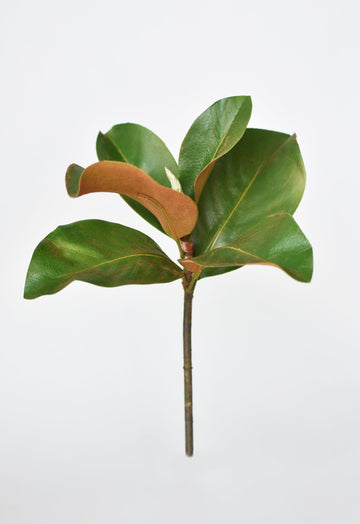
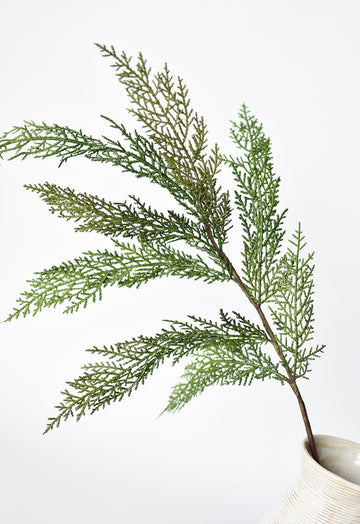
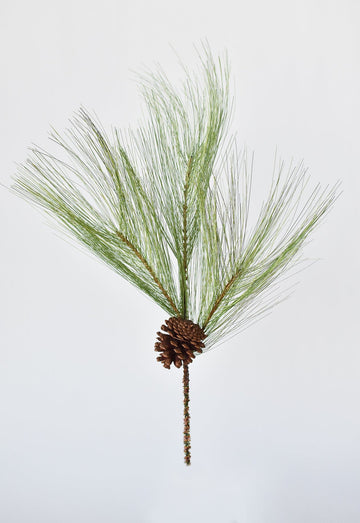
INCASE YOU WONDERED
Frequently Asked Questions
What is the Holy Trinity of Evergreen?
The Holy Trinity of Evergreen is our name for the three faux greenery stems that build a full, layered Christmas tree: long needle pine, cedar, and magnolia leaf. Pine sets the shape, cedar fills the gaps and softens the edges, and magnolia adds the wide, glossy leaves that give a tree depth instead of a flat green wall. Together they cover every job a tree needs done.
How many stems do I need for my Christmas tree?
It depends on two things: how tall your tree is and how wide it is at the base. A narrow slim tree needs far fewer stems than a full traditional tree of the same height. The calculator on this page asks for both, then gives you a stem count for each of the three greeneries. You do not have to guess or buy in round numbers and hope.
How does the stem calculator work?
Enter your tree height, choose your tree width, and pick how full you want it to look. The calculator uses the same formula we use in our own store to spec a tree, based on the surface area your tree actually has to cover. It returns a count for pine, cedar, and magnolia separately, plus a running total, and you can add the whole set to your cart in one click.
Which three stems are in the Holy Trinity?
Long needle pine, cedar, and magnolia leaf. Pine is the structure stem, the one that reads as evergreen from across the room. Cedar is the filler, with a finer texture that hides the tree's inner frame. Magnolia is the statement leaf, broad and glossy, and it is the one that makes people ask where you had your tree done.
Do I have to buy all three at once?
No, and most people do not. Start with pine and cedar, which do the heaviest lifting on shape and fullness, then add magnolia the following season. The calculator has a two-path checkout for exactly this reason. We carry these same three stems year after year, so the ones you add next year will match the ones already in your bins.
What do Light, Signature, and Lavish mean?
Those are the three coverage levels in the calculator. Light gives you enough greenery to soften a tree and fill the obvious gaps. Signature is our house standard, the density we use on the trees in our showroom. Lavish is for a tree that reads as fully custom, with layered greenery deep enough that you stop seeing the artificial branches underneath entirely.
How many stems does a 7.5 foot tree need?
A standard 7.5 foot tree with a 55 inch base needs roughly 50 total greenery stems at Signature coverage, split across pine, cedar, and magnolia. A 9 foot tree with a 62 inch base needs closer to 70. Slim and pencil trees of the same height need noticeably fewer, since the number is driven by surface area, not height alone.
Where does each stem go on the tree?
Work from the inside out. Pine goes deepest, tucked toward the trunk to build shape and hide the pole. Cedar layers on top of the pine to fill in the middle depth. Magnolia goes last and sits closest to the outer edge, where the wide leaves catch light and give the tree its finished, layered look.
Can I use these stems on anything besides a tree?
Yes, and that is part of why we standardize on three. The same pine, cedar, and magnolia stems work in mantel garlands, staircase garlands, centerpieces, wreaths, and vase arrangements. A stem you buy for the tree is never a single-use purchase. If you over-buy slightly, the extras have somewhere to go.
Will you carry these same stems next year?
Yes. That is the whole point of naming them the Holy Trinity instead of rotating our greenery every season. These three are the stems we build our own designs around, and we restock them year after year specifically so customers can build a tree in stages without ending up with a mismatched collection.
Can I add stems to a tree that is already decorated?
Yes. Greenery stems tuck in between existing branches without removing anything, so you can add to a lit and ornamented tree. Work in sections and step back every few stems. If you are adding to an existing tree rather than starting fresh, run the calculator and then buy about two thirds of what it recommends, since your tree already has some fill.
How do I store faux greenery stems between seasons?
Lay them flat in a lidded bin rather than standing them upright or compressing them under weight. Pine and cedar bounce back from light crushing with a quick fluff, but magnolia leaves can hold a bend, so store those on top. Kept flat and dry, these stems will outlast several real trees, which is why buying in stages works.